Home Inverter Buying Guide: How to Choose the Right Inverter & Battery for Your Home?
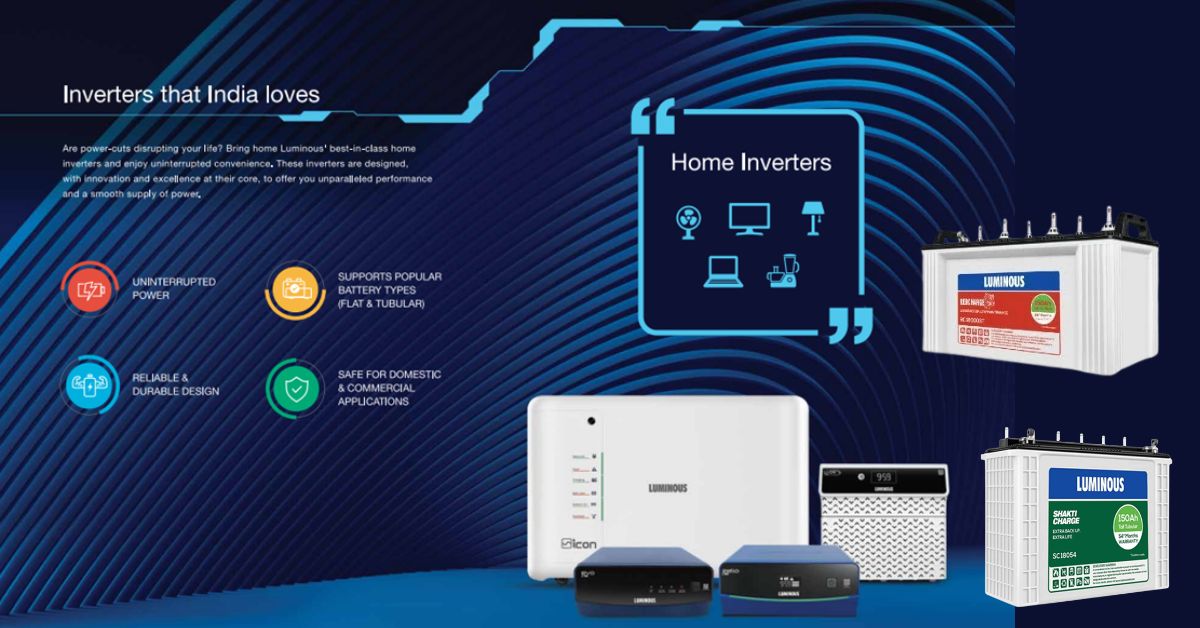
Power cuts and voltage fluctuations can disrupt everyday life at home. From fans and lights to Wi-Fi routers, televisions and computers, a reliable power backup system can help keep essential appliances running when the electricity supply is interrupted.
But choosing an inverter isn’t simply about buying the highest-capacity model or the cheapest option available.
Your ideal home inverter depends on your appliance load, required backup time, battery type, available space, budget and future requirements.
This complete home inverter buying guide explains the important factors you should consider before buying an inverter and battery for your home.
What Is a Home Inverter?
A home inverter is a power-backup device that supplies electricity to selected appliances when the main power supply is unavailable.

When electricity is available, the system charges the battery. During a power interruption, the stored energy in the battery is converted into usable electrical power for the connected appliances.
A typical home backup system consists of:
- Inverter
- Battery
- Wiring and connections
- Appropriate protection devices
- Installation and commissioning
The inverter and battery work together, so choosing only the inverter capacity without considering the battery and connected load can result in disappointing backup performance.
Why Choosing the Right Inverter is important?
Buying the wrong inverter can create several problems.
If the inverter is undersized:
- It may not support the appliances you want to run.
- It may overload when multiple appliances operate together.
- Your expected backup may not be achieved.
If the system is unnecessarily oversized:
- You may spend more than necessary.
- The overall system may not be appropriate for your actual usage.
The objective is therefore not simply to buy a “big” inverter.
The objective is to choose the right power-backup system for your actual requirement.
Step 1: Identify Which Appliances You Want to Run
Before choosing an inverter, make a list of the appliances you want to operate during a power cut.
For example:
| Appliance | Approximate Load* |
| LED bulb | 8–12 W |
| Ceiling fan | 50–80 W |
| Wi-Fi router | 10–20 W |
| Television | 60–150 W |
| Laptop | 45–100 W |
| Refrigerator | Varies |
| Desktop computer | Varies |
*Actual power consumption varies depending on the appliance model and usage.
Don’t assume that every appliance in your house needs to be connected to the backup system.
Many households only need backup for essential appliances such as:
- Fans
- Lights
- Wi-Fi router
- Television
- Computer
- Selected other essential equipment
Step 2: Calculate Your Approximate Load
Once you’ve identified the appliances, estimate their power consumption and add the loads together.
For example, suppose you want to operate:
- 3 fans
- 4 LED lights
- 1 television
- 1 Wi-Fi router
Your approximate connected load would be the combined wattage of these appliances.
However, actual inverter sizing is more than simply adding numbers. Appliance characteristics, starting loads and the desired operating margin should also be considered.
That’s why professional assessment can be useful when you are unsure about the appropriate inverter capacity.
A simple rule:
First calculate your actual requirement. Then select the inverter.
Don’t start with:
“I want a 1 KVA inverter.”
Start with:
“These are the appliances I want to run, and this is how long I want them to operate.”
Step 3: Understand VA, Watt and KVA
Inverter specifications can sometimes be confusing because manufacturers may specify capacity in VA or KVA, while appliances are commonly described in watts.
Watt (W)
Watt represents real power consumption.
VA
VA stands for Volt-Ampere and represents apparent power.
KVA
1 KVA = 1,000 VA.
The relationship between watts and VA depends on the power factor of the load.
For this reason, don’t select an inverter purely by comparing the wattage number with the KVA rating.
If you’re unsure about the appropriate capacity, provide your appliance list to a qualified power-backup professional and ask for a requirement assessment.
Step 4: Decide How Much Backup You Actually Need
The next question is:
“How long do I want my appliances to run during a power cut?”
Your answer could be:
- 1 hour
- 2 hours
- 3 hours
- Longer depending on your requirements
Backup time depends on several factors, including:
- Battery capacity
- Connected load
- Battery condition
- Inverter efficiency
- Usage pattern
- Environmental and installation conditions
For example, running only a few fans and lights will generally require less stored energy than running several higher-power appliances.
Important:
More battery capacity does not automatically mean unlimited backup.
The actual backup time depends on both the battery capacity and the load being operated.
Step 5: Choose the Right Battery
The battery is one of the most important components of your home power-backup system.
Two commonly discussed battery technologies are:
Tubular Batteries
Tubular batteries are widely used for home inverter applications.
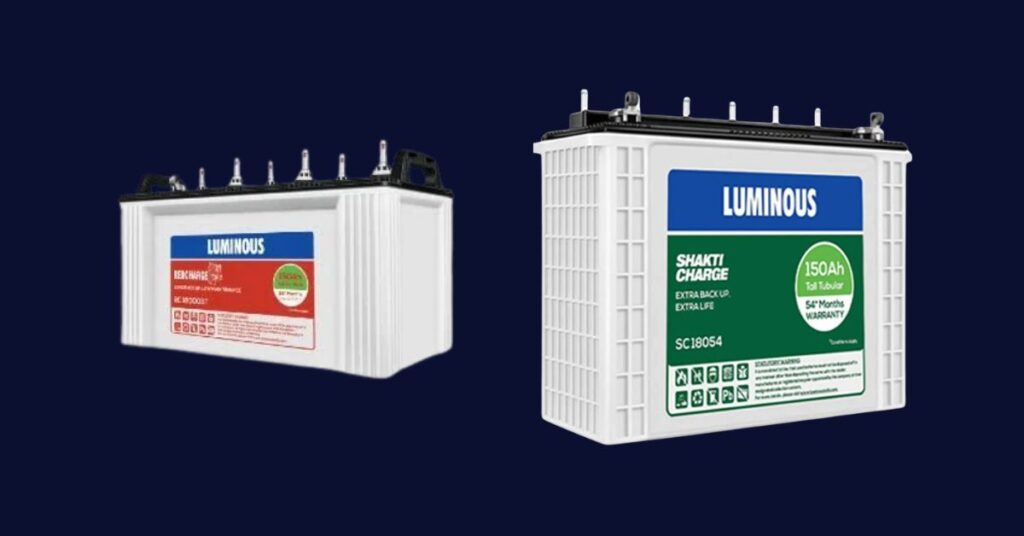
Potential advantages include:
- Commonly available
- Suitable for regular backup applications
- Available in different capacities
- Established technology
They generally require appropriate maintenance and installation practices.
Lithium Batteries
Lithium-based batteries are another option for certain applications.
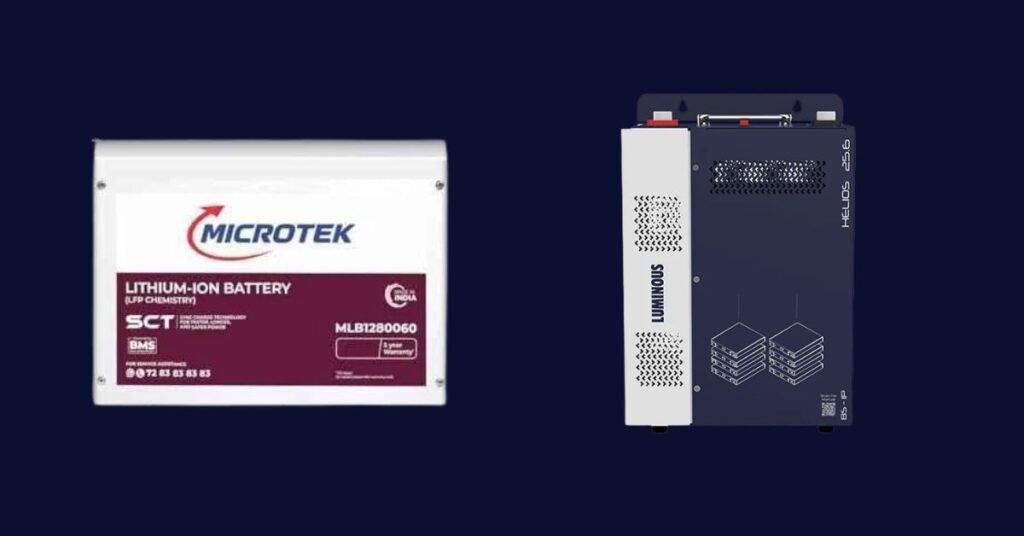
Potential advantages can include:
- Compact form factor
- Lower routine maintenance requirements in many systems
- Different charging characteristics
- Potentially long service life depending on the product and usage
However, lithium systems can have a higher initial purchase price, and suitability depends on the application.
Which is better?
There isn’t one battery type that is automatically right for every household.
The appropriate choice depends on:
- Backup requirement
- Usage pattern
- Available space
- Budget
- Expected operating conditions
- Desired maintenance level
- Compatible inverter technology
Step 6: Think About Battery Capacity
Battery capacity is commonly expressed in Ah (Ampere-hours).
For example, you may come across batteries specified as:
- 100 Ah
- 120 Ah
- 150 Ah
- 200 Ah
A higher Ah rating generally represents greater stored capacity under specified conditions.
But don’t choose a battery simply because it has the largest Ah number.
The battery should be compatible with the inverter and appropriate for the intended load and backup requirement.
Step 7: Pure Sine Wave vs Other Waveforms
Another specification you may encounter when buying an inverter is the output waveform.
For many modern household applications, pure sine wave inverters are commonly preferred because they provide an AC waveform similar to conventional utility power.
This can be particularly relevant when powering equipment such as:
- Computers
- TVs
- Networking equipment
- Audio/video equipment
- Other sensitive electronic devices
When buying an inverter, check the manufacturer’s specifications and make sure the selected system is appropriate for the appliances you intend to operate.
Step 8: Consider Your Future Requirements
One common mistake is buying a system based only on today’s requirements.
Think about what you might add in the future.
For example:
- Another fan
- Additional lighting
- Wi-Fi/networking equipment
- Computer
- Home-office equipment
- Other essential appliances
However, don’t unnecessarily oversize the system just because you might add appliances someday.
A professional requirement assessment can help you balance current usage, future needs and cost.
Step 9: Don’t Ignore Installation
Even a good inverter and battery need proper installation.
Installation should consider:
- Correct wiring
- Appropriate cable sizing
- Ventilation
- Battery placement
- Safety
- Earthing
- Protection devices
- Correct connections
- Manufacturer guidelines
Battery location is particularly important.
The installation environment should be suitable for the battery technology being used and should follow the manufacturer’s recommendations.
Step 10: Check After-Sales Service
The purchase isn’t the end of the process.
Your power-backup system may eventually require:
- Battery inspection
- Troubleshooting
- Battery replacement
- Inverter servicing
- Preventive maintenance
- Installation support
- AMC/service support
Therefore, when comparing suppliers, don’t look only at the product price.
Also consider:
Who will install it?
Who will service it?
Where will you get support if something goes wrong?
For a home power-backup system that you expect to use for years, local service availability can be an important consideration.
10 Common Mistakes to Avoid When Buying a Home Inverter
1. Buying only based on price :The cheapest system isn’t necessarily the most suitable system for your requirement.
2. Choosing capacity without calculating the load: First identify the appliances you need to run.
3. Ignoring battery selection: The inverter and battery need to work as a suitable combination.
4. Expecting too much backup from a small battery: Backup time depends on load and available battery capacity.
5. Running unnecessary appliances during a power cut: The more load you connect, the faster stored energy is consumed.
6. Ignoring installation quality: Poor installation can affect performance and safety.
7. Not considering future requirements:Think about reasonable future additions to your essential load.
8. Ignoring maintenance: Regular attention can help identify issues before they become bigger problems.
9. Buying without checking compatibility: The inverter, battery and connected loads should be compatible.
10. Choosing a supplier without considering service: Product support and service availability matter over the life of the system.
Home Inverter Buying Checklist
Before you buy, answer these questions:
Your Load
☐ Which appliances do I want to run?
☐ What is the approximate combined load?
Backup
☐ How many hours of backup do I need?
☐ Which appliances are essential?
Battery
☐ Which battery technology suits my usage?
☐ What battery capacity do I need?
Inverter
☐ What inverter capacity is appropriate?
☐ Is the inverter compatible with my battery?
☐ Is the output waveform suitable for my appliances?
Installation
☐ Where will the battery and inverter be installed?
☐ Is the location appropriate?
☐ Will the installation follow manufacturer recommendations?
Service
☐ Who will install the system?
☐ Who will provide service?
☐ Is battery replacement support available?
☐ Is maintenance/AMC available?
When Should You Talk to a Power-Backup Expert?
If you’re comfortable calculating your load and understanding inverter specifications, you can compare products yourself.
But professional guidance can be particularly useful when:
- You have many appliances
- You need several hours of backup
- You work from home
- You have sensitive electronic equipment
- You’re setting up backup for a large home
- You’re considering lithium batteries
- You’re unsure about KVA requirements
- You’re replacing an existing system
- You need installation and maintenance support
Instead of asking:
“Which inverter is the best?”
A better question is:
“Which inverter and battery combination is appropriate for my home’s actual requirements?”
Why Choose Veda Power?
Veda Power Conditioners & Solutions provides power-backup solutions for homes and commercial establishments.
The business supports customers with solutions and services including:
- Home inverter solutions
- Batteries
- UPS systems
- Servo stabilizers
- Rooftop solar solutions
- Installation
- Repair and troubleshooting
- Battery maintenance
- AMC/service support
Veda Power has been serving customers since 2008 and operates from Secunderabad.
If you are unsure about the right inverter, battery capacity or backup configuration for your home, you can discuss your requirement with the Veda Power team before making a purchase.
Frequently Asked Questions
How do I choose an inverter for my home?
Start by identifying the appliances you want to operate during a power cut, estimate their combined load and determine how much backup time you need. Then select an appropriately sized inverter and compatible battery.
How much backup does a home inverter provide?
Backup time depends on battery capacity, connected load, inverter efficiency, battery condition and usage. A lighter load generally consumes stored energy more slowly than a heavier load.
Is a tubular or lithium battery better?
Both technologies have different characteristics. The appropriate choice depends on your usage, budget, available space, maintenance preferences and inverter compatibility.
How long does an inverter battery last?
Battery life varies depending on battery technology, usage, charging conditions, maintenance, operating environment and product quality. Follow the manufacturer’s recommendations and service guidance.
Can an inverter run a refrigerator?
It depends on the inverter’s capacity, the refrigerator’s electrical characteristics and the overall connected load. Refrigerators can have starting/current characteristics that should be considered when sizing the system.
Do I need a UPS or an inverter?
It depends on what you need to power and the level of power protection required. A basic home backup requirement and a business using sensitive equipment may require different solutions.
Should I buy the biggest inverter available?
Not necessarily. The correct system should be sized according to your actual load, backup requirement and future needs.
Does Veda Power provide installation and service?
Veda Power offers installation and service support for its power-backup solutions. Discuss your specific requirement with the team to understand the available service options.
Final Takeaway
Choosing a home inverter isn’t about finding the biggest or cheapest model.
It is about finding the right combination of inverter capacity, battery capacity, technology and installation for your actual power requirement.
Before you buy:
- Calculate your load.
- Decide your backup requirement.
- Choose a suitable battery.
- Check inverter compatibility.
- Consider installation and service.
And if you’re unsure, get your requirement assessed before making the purchase.
Need help choosing a home inverter?
Talk to Veda Power Conditioners & Solutions and discuss your appliance load, backup requirement and budget before selecting your power-backup system.
Veda Power Conditioners & Solutions
Secunderabad, Hyderabad
Power Backup • UPS • Batteries • Stabilizers • Solar • Service